Worried About Your Child's Development but Not Sure Where to Start?
You may know that something is making everyday life difficult for your child without knowing whether it relates to autism, speech and language development, sensory needs, movement, or another area of development. Perhaps your child cannot tell you what they want, uses fewer words than expected, avoids interaction, repeatedly plays in the same way, becomes very upset when plans change, or struggles with dressing, feeding, noise, or busy environments. Start with what you observe during normal routines. Communication concerns may point toward speech and language assessment, sensory or self-care difficulties may relate to occupational therapy, and movement problems may require physiotherapy. When several developmental concerns occur together, broader professional evaluation may also be appropriate.
What Does Autism Mean for Your Child?
Autism is a developmental condition associated with differences in social communication and interaction together with restricted or repetitive patterns of behavior, interests, or activities. It can look very different from one child to another. One child may use few spoken words and have difficulty communicating basic needs, while another may speak in full sentences but struggle with conversation, social interaction, change, or understanding everyday situations. Sensory responses, play, learning, movement, attention, and daily living skills may also differ between children. For this reason, support should not be based only on the autism label. The difficulties affecting your child’s communication, participation, independence, and everyday routines should help determine which areas need attention.
What Signs Should You Discuss With a Professional?
You do not need to diagnose your child yourself before asking questions. Professional advice may be useful when differences in development repeatedly affect communication, interaction, learning, play, movement, or everyday routines. You may notice that your child speaks less than expected, loses previously used words or skills, has difficulty asking for things, uses fewer gestures, responds inconsistently when called, repeats particular words or activities, becomes highly distressed by changes, prefers very repetitive play, finds interaction with other children difficult, reacts strongly to sounds or textures, or struggles with dressing and feeding. One sign by itself does not confirm autism. The wider developmental pattern and its effect on everyday life matter more than a single behavior.
Does Speech Delay Mean Your Child Has Autism?
No. Speech delay does not automatically mean that a child is autistic. Children can develop spoken language more slowly for different reasons, and some children mainly have difficulty expressing themselves while others may also have difficulty understanding language. Hearing difficulties and other developmental conditions can also affect communication. Rather than considering only the number of words your child uses, look at communication more broadly. Notice whether your child uses gestures, understands simple instructions, shares attention, shows you things, asks for help, and interacts during play. If speech delay occurs together with concerns about social interaction, repetitive behavior, routines, play, or sensory responses, broader developmental assessment may also be worth discussing.
What Can Autism Therapy Help Your Child With?
Autism Therapy can focus on the everyday difficulties that are affecting your child’s communication, interaction, play, routines, independence, or participation at home and school. You may be concerned because your child finds it difficult to express needs, interact with other people, cope with changes in routine, take part in play, manage certain sensory experiences, or complete daily activities. Support should be based on the specific difficulties your child is experiencing rather than using the same activities for every autistic child. The aim is to identify practical areas where your child needs support and work toward skills that can make everyday participation more manageable. At our autism center in Gujrat, support can be planned around the specific communication, routine, sensory, social, or daily-life difficulties affecting your child.
Why Does Your Child Find Everyday Routines Difficult?
Activities that seem simple to an adult can involve several skills at the same time. Getting dressed may require understanding instructions, tolerating clothing sensations, coordinating hand movements, using buttons or zips, and moving from one activity to another. Mealtimes may involve communication, smell, food texture, fine motor skills, sitting, and familiar routines. Getting ready for school can involve noise, time pressure, transitions, social expectations, and instructions. Instead of looking only at the difficult behavior, consider which part of the activity may be causing difficulty. Understanding the underlying need can help identify whether communication support, occupational therapy, environmental changes, another service, or a combination of approaches may be relevant.
Why Does Your Child React Strongly to Sounds, Clothing, or Food Textures?
Some autistic children respond differently to sensory information. Your child may cover their ears in response to certain sounds, avoid particular fabrics, refuse foods with specific textures, become uncomfortable in crowded environments, or seek particular types of movement or touch. These responses can affect eating, dressing, learning, play, family outings, sleep, and other routines. If sensory responses repeatedly interfere with daily activities, occupational therapy may be relevant. The useful question is not simply whether your child likes or dislikes a sensation, but whether the response is making participation or independence difficult and what changes may help the child manage the activity more effectively.
Why Does Your Child Become Upset When a Routine Changes?
Predictable routines can make everyday situations easier for some autistic children to understand. An unexpected change in the route to school, mealtime, therapist, classroom activity, or family plan may therefore cause distress, especially when the child does not understand what will happen next or finds it difficult to communicate why the change feels uncomfortable. Support may involve making routines easier to understand, preparing the child for changes, using appropriate communication or visual information, and helping the child participate in everyday situations according to their developmental abilities. The aim is not to remove every preferred routine, but to support situations where difficulty with change is significantly interfering with daily life.
Why Can the Environment Affect an Autistic Child?
The environment can change how easy or difficult an activity feels for an autistic child. Noise, lighting, crowded rooms, unfamiliar people, waiting, limited personal space, strong smells, or unpredictable changes may increase difficulty for some children. A child who manages well in a quiet room may struggle in a busy classroom or crowded family event because the sensory and social demands are different. This is why it can be useful to consider both the child’s abilities and the environment where the problem occurs. Suitable adjustments, clearer routines, visual information, or changes to the setting may sometimes help participation alongside therapy when individual needs indicate that support is required.
How Can School Difficulties Affect Therapy Goals?
School involves much more than academic learning. Your child may need to understand instructions, communicate with teachers, manage transitions between activities, tolerate classroom sounds, use pencils and other materials, interact with classmates, follow routines, and participate in group activities. Difficulties in any of these areas can affect participation even when the child has academic strengths. Information from parents and teachers can help identify which school situations are difficult and whether communication, occupational, behavioral, environmental, or other support should be considered. Therapy goals should relate to the actual school difficulty rather than assuming that every autistic child needs the same classroom skills.
How Are Autism Therapy Goals Chosen?
Goals should come from your child’s individual abilities, difficulties, developmental level, and everyday needs. A useful goal is usually connected with something your child needs to do more effectively, such as communicating a basic need, participating in play, following part of a routine, becoming more independent during dressing, or taking part in a classroom activity. Parents can explain which situations create the most difficulty at home or in the community, while therapists can assess the skills involved. Goals may change as your child’s abilities and needs change. A therapy activity should therefore have a clear connection with a meaningful functional goal rather than being included simply because it is commonly used with autistic children.
How Is Progress Reviewed During Autism Therapy?
Progress should be reviewed according to the goals that matter in your child’s everyday life rather than only by how your child performs during a therapy session. You may notice that your child communicates a need more clearly, participates in a routine with less support, manages a change more successfully, joins an activity for longer, interacts more effectively with family members, or uses a skill in more than one setting. You and the therapist can discuss what is changing at home, school, during play, and in other daily situations. If a goal is not improving, the approach may need to be adjusted so support remains connected with your child’s current needs.
How Can Parents Help Identify Therapy Priorities?
Parents see their child’s abilities across situations that may not occur during a therapy appointment. You know what happens during breakfast, dressing, play, school preparation, family visits, outings, bedtime, and other daily routines. Sharing specific examples can help identify where difficulties occur and what may be contributing to them. Instead of saying only that your child has a sensory or communication problem, explain what happens during the activity, what your child currently does, what seems difficult, and what you would like them to be able to do. This information can help connect therapy goals with situations that matter to your family and can also show when another type of assessment may be useful.
Can Your Child Need More Than One Type of Therapy?
Yes, when separate difficulties require support from different professional areas. Your child may need speech therapy because communicating needs is difficult while occupational therapy addresses dressing, feeding, fine motor, or sensory-related problems. If a separate physical difficulty affects balance, strength, walking, or gross motor function, physiotherapy may also be relevant. Receiving more therapies does not automatically mean receiving better care. Each service should have a clear purpose and should address a difficulty that affects your child’s communication, participation, movement, independence, or everyday life. If two services are addressing the same issue without a clear reason, the goals should be reviewed rather than assuming more sessions are always beneficial.
What Happens During an Autism Therapy Assessment?
An Autism Therapy assessment starts with understanding what you are noticing in your child’s daily life. You may be asked about communication, interaction with family or other children, play, routines, reactions to change, sensory responses, self-care, school participation, and activities your child finds particularly easy or difficult. The professional may observe how your child communicates, responds to people, participates in activities, follows routines, plays, and manages different situations. Your child’s strengths are also important. The information gathered during assessment helps identify which functional difficulties need attention and whether Autism Therapy, another related service, or additional professional assessment may be appropriate.
Why Choose an Autism Center Near You?
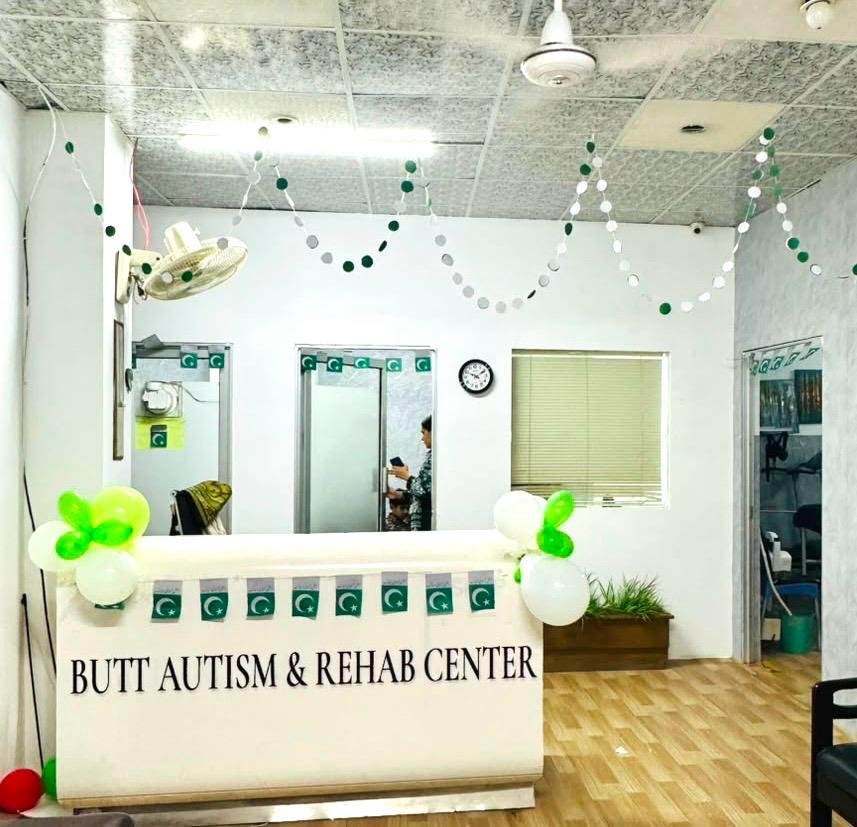
When your child needs regular developmental or therapy appointments, travelling a long distance for every session can make an already busy family routine more difficult. Choosing an autism center near you can make it easier to attend recommended appointments, discuss changes in your child’s needs, and involve parents in decisions about everyday goals. Location should not be the only factor when choosing care, however. You should also consider whether the available services match your child’s actual needs, whether goals are individualized, and whether you can discuss concerns openly. Our Katchery Chowk location gives families local access to autism-related support and related therapy services in Gujrat.
Frequently Asked Questions About Our Autism and Child Therapy in Gujrat
Does Every Autistic Child Need the Same Therapy?
No. One child may mainly need communication support, while another may have greater difficulties involving sensory responses, self-care, movement, play, routines, or participation. Autism can affect children differently, so therapy should relate to the individual child’s strengths, limitations, and everyday needs rather than using one standard program for every autistic child.
My Child Is Not Talking Yet. Should I Just Wait?
Children develop language at different rates, but ongoing communication concerns are worth discussing rather than assuming that time alone will resolve every difficulty. A speech and language assessment can consider how your child understands language, uses gestures, communicates wants and needs, and develops spoken language. If communication difficulties occur alongside other developmental concerns, broader evaluation may also be appropriate.
My Child Repeats the Same Words or Phrases. Does That Confirm Autism?
No. Repeated words or phrases can occur in autistic children, but one communication behavior by itself cannot confirm autism. Diagnosis considers the wider developmental pattern, including social communication and interaction together with restricted or repetitive behaviors, interests, or patterns. If you have concerns, discuss the full range of behaviors and developmental differences you are noticing rather than relying on one sign.
Can Speech Therapy Help an Autistic Child Who Uses Very Few Words?
Speech therapy may be relevant when your child has difficulty understanding or expressing communication. Support does not need to depend entirely on spoken words because some children may also use gestures, pictures, signs, or other communication methods. The aim should be useful communication that helps the child express needs, make choices, understand others, and participate more effectively in everyday situations according to individual abilities.
Will Autism Therapy Make My Child Start Talking?
No specific speech outcome can be guaranteed. Autistic children have different communication profiles and developmental abilities. If spoken language is an appropriate goal, speech and language support may work on communication skills, but progress varies between children. The broader aim should be helping your child communicate as effectively as possible using methods suited to their needs rather than promising that a particular number of therapy sessions will produce spoken language.
Can Occupational Therapy Help If My Child Struggles With Clothes or Food Textures?
It may be relevant when sensory responses or functional difficulties interfere with dressing, eating, or other routines. An occupational therapist can assess how the child participates in the activity and whether sensory responses, fine motor ability, coordination, or another functional factor is contributing to the difficulty. Support should focus on helping the child participate more effectively rather than treating every dislike of a texture as a problem requiring therapy.
Does My Autistic Child Automatically Need Physiotherapy?
No. Physiotherapy is relevant when there is a separate physical difficulty involving strength, balance, posture, walking, coordination, or gross motor function. An autism diagnosis by itself is not a reason for physiotherapy. The decision should come from a movement-related problem that is affecting play, mobility, independence, or another everyday physical activity.
Why Does My Child Become Frustrated When They Cannot Communicate?
Frustration can increase when a child cannot easily explain what they want, what they dislike, what hurts, or what help they need. Understanding how your child currently communicates can help identify whether speech and language support, another communication method, environmental changes, or a different approach may be useful. The goal should be to understand the communication need behind the situation rather than treating frustration alone as the main problem.
Can Autism Be Diagnosed Through a Blood Test or Brain Scan?
No routine blood test or brain scan can diagnose autism. Autism diagnosis is based on developmental history and professional evaluation of the child’s behavior, communication, interaction, and development. Screening tools can identify concerns that may need further evaluation, but screening itself does not establish a diagnosis. Parents who are concerned about autism should discuss the appropriate developmental assessment process with a qualified healthcare professional.
When Should I Ask About an Autism Assessment?
You can raise developmental concerns whenever persistent differences in communication, interaction, play, routines, repetitive behavior, sensory responses, or development worry you or interfere with your child’s everyday life. You do not need to wait until school age. If several concerns appear together or a developmental screening raises concerns, an appropriate professional can advise whether a more detailed developmental evaluation should be considered.
What If My Child Loses Words or Skills They Previously Used?
Loss of previously acquired language or other developmental skills should be discussed with your child’s healthcare professional. Explain what your child could previously do, approximately when the change occurred, whether the change was sudden or gradual, and whether you noticed differences in communication, movement, behavior, play, or another area of development. Developmental regression should not simply be assumed to be a normal variation without professional advice.
Does Autism Therapy Cure Autism?
Autism should not be presented as something a therapy session can cure. Therapy and developmental services can support specific difficulties that affect communication, participation, independence, learning, movement, sensory responses, or everyday functioning. Goals should focus on helping the child manage meaningful activities and develop useful skills according to individual needs rather than promising to remove autism.
How Many Therapy Sessions Will My Child Need?
There is no single number that is appropriate for every child. The type and frequency of therapy should depend on the difficulties identified, the goals being addressed, the child’s progress, and how those difficulties affect daily participation. Needs can also change over time. Therapy should therefore be reviewed periodically rather than continuing indefinitely simply because a child has an autism diagnosis.

 Address: Backside of Butt Brother Pharmacy, Katchery Chowk, Gujrat
 Opening Hours: Mon–Sat 9am–5pm