
Behavior Therapy in Gujrat - Help Your Child Ask, Not Scream
Tantrums, meltdowns or aggression leaving your family drained? Get a behavior assessment and practical home strategies in Gujrat. Book a visit today.
Make an Appointment
Our Reviews
EXCELLENT Based on 26 reviews
 Posted on Google

 MuhammadnizamuddinwliMere shoulder me kafi severe injury hoi thee tu I visited them or then I had some therapy sessions or I felt really fast recovery highly recommend 🙌🏻Posted on Google
 Haleema Salahuddinreally careful inspection and effective treatment, theyre putting in effort in each person's case, im personally well satisfiedPosted on Google
 Gul FansExcellent clinic with a caring and professional team. Very supportive environment, dedicated staff, and commendable services for children with autism and special needs. Highly recommended in Gujrat!Posted on Google
 Muhammad Junaid GulBest Rehab Clinic in GujratPosted on Google
 Bareera Attique ButtThey doing a wonderful job! The team puts in so much effort and dedication to support the children and helps them participate in highly beneficial and engaging activities.Keep up the amazing work! ❤️👏Posted on Google
 Habiba MudassarI have very good experience from butt autism and rehab center. Ms Rimsha is very good physiotherapist...highly recommended from my sidePosted on Google
 mishaal buttButt Autism and Rehab Centre is a great place for children with special needs. The staff is kind, caring, and really puts effort into helping every child improve.Posted on Google
 Iqra MuddasarMy experience at the Butt Rehan center was excellent. I underwent physiotherapy sessions for my shoulder , and I experienced significant relief from my pain. The sessions were very smooth, comfortable, and well-organized. The doctor was very kind, professional, and supportive throughout the treatment. She explained everything clearly and made me feel comfortable during each session. The overall environment was welcoming, and the staff was cooperative and helpful. I am very satisfied with the treatment and care I received, and I would highly recommend this center to anyone looking for quality physiotherapy services.Posted on Google
 Yumna AliMe ny google sy search kiya tha inhe or me jb 1st time mili mje bht khushi hoi itny achy sy bat ki meri bat ko smja or sb sy main Pakistan mey after 10y ye 1st medical center jo itna clean tha or sb log andar jo workers he bht achy hePosted on Google
 GulmeenaMy nephew received speech therapy sessions here, and the results were truly magical! ❤️ Alhamdulillah, Allah helped us so much, and these therapists are genuinely amazing, dedicated, and professional. I’m truly grateful for their efforts and highly recommend them! 🌟Verified by TrustindexTrustindex verified that these reviews were published on Butt Autism & Rehab Center's Google Business Profile. Learn more
Why Choose Our Behavior Therapy in Gujrat?
Understanding Before Changing
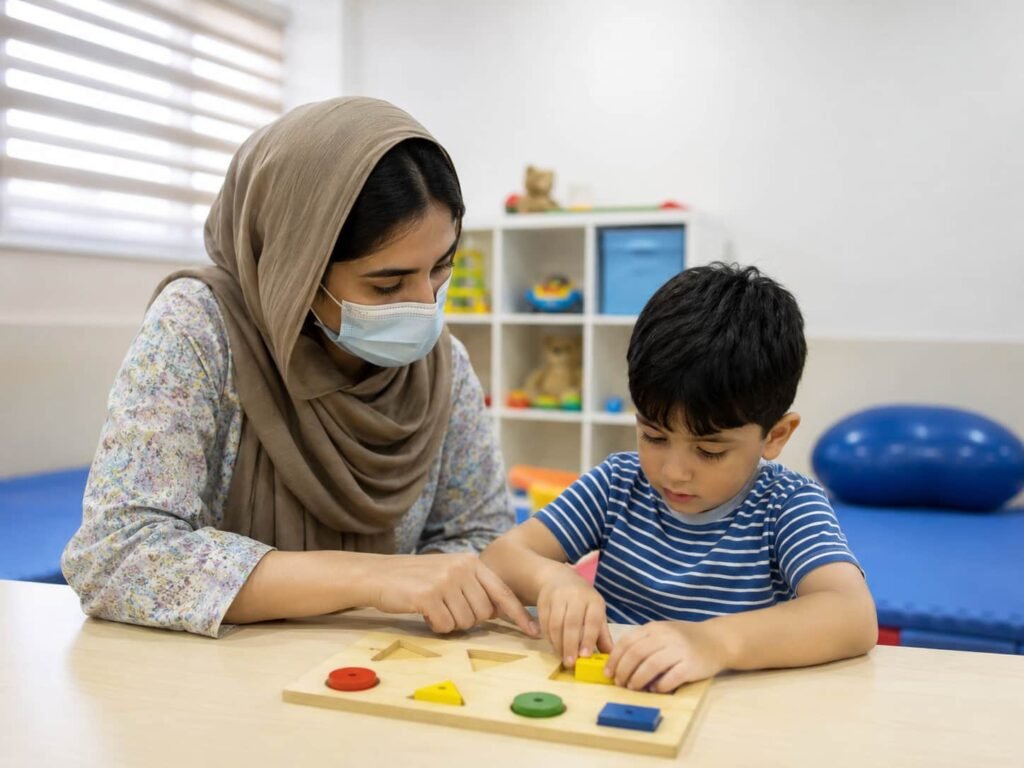
Your child’s behavior is assessed before any plan is made, because the same tantrum can have very different reasons in two different children.
Parents Learn the Strategies Too
You learn simple strategies to use at home, so progress can continue between sessions instead of staying in the therapy room.
Related Therapies in One Place
If communication, sensory or daily living difficulties are behind the behavior, speech therapy and occupational therapy are available at the same center.
Inside Butt Autism & Rehab Center
Behavior Therapy Near You in Gujrat
 Address: Backside of Butt Brother Pharmacy, Katchery Chowk, Gujrat
 Opening Hours: Mon–Sat 9am–5pm
Butt Autism & Rehab Center is a therapy and rehabilitation center in Gujrat offering behavior, autism, speech and occupational therapy for children. The clinic is behind Butt Brother Pharmacy at Katchery Chowk, near Zahoor Elahi Stadium, so families from different parts of the city can reach it easily for assessments and regular sessions.
Call us for Free Consultation
Our Pricing
Behavior Therapy → Rs.1500/session
Physiotherapy → Rs.1500/session
Autism Therapy → Rs.1500/session
Speech Therapy → Rs.1500/session
Occupational Therapy → Rs.1500/session
Cupping Therapy → Rs.300/cup
What Is Behavior Therapy?
Behavior therapy is a structured way of understanding why a child behaves in a certain way and helping them learn more useful ways to get what they need. Instead of focusing only on stopping a behavior, it looks at what happens before it, what the child gains or avoids through it, and which skill could replace it. A child who screams to escape a hard task, for example, may be taught to ask for help or a short break. Positive behavior is noticed and encouraged, so your child has a reason to use the new skill.
Which Behaviors Can Behavior Therapy Help With?
.Behavior therapy may help when a behavior happens often, lasts a long time, puts someone at risk or stops your child from taking part in family life, school or play. Common reasons families ask for help include:
- Frequent tantrums, screaming or crying that is hard to settle
- Hitting, biting, kicking, pushing or throwing things
- Hurting themselves, such as head-banging or biting their own hand
- Refusing instructions, or struggling to stop one activity and start another
- Difficulty waiting, sharing or taking turns
- Mealtime battles, food refusal, bedtime struggles or toileting difficulties
- Running off or wandering away in public places
- Breaking things, or tantrums when screen time ends
Your child does not need to show all of these. One behavior that keeps affecting daily life is reason enough to ask. Behavior difficulties are more common than many parents think: a Pakistani study of school children found behavior problems in about 16 in every 100 children (Journal of Paediatrics and Child Health, 2019).
Is It a Tantrum or a Meltdown?
A tantrum and a meltdown can look similar, but they often need different responses. A tantrum usually has a goal, such as getting a toy or avoiding a task, and may ease once the child sees it is not working or gets what they want. A meltdown is more often a reaction to feeling overwhelmed, for example by noise, crowds, tiredness or too many demands, and the child may not be able to stop even when they want to. During a meltdown, the priority is keeping your child safe and calm, not teaching a lesson. Knowing which one you are seeing helps decide what to do next.
Why Does Your Child Behave This Way?
Behavior is often a way of communicating something a child cannot yet say in words. Your child may be asking for something they want, trying to get out of a task that feels too hard, looking for your attention, reacting to a sound, texture or busy place, or showing that they are tired, hungry, unwell or in pain. Sometimes one behavior serves more than one purpose. Children who find it hard to talk or understand language may rely on behavior more, which is why communication is often part of the plan. If changes in routine or sensory reactions seem to be the main trigger, our autism therapy page explains those needs in more detail.
What Happens During a Behavior Therapy Assessment?
The assessment starts with you. You may be asked what the behavior looks like, when it began, how often it happens, where it happens most, and what usually happens just before and after it. The therapist will also ask about your child’s communication, sleep, eating, health, school and daily routine, as well as what your child enjoys and does well. Your child may be observed during play and simple tasks. You may also be asked to keep a short record at home of when the behavior happens and what was going on at the time. Together, this information helps identify patterns and decide which behavior to work on first.
What Can Behavior Therapy Include?
Each plan is built around your child, but behavior therapy often includes:
- Teaching replacement skills, such as asking for help, asking for a break, saying “no” safely or waiting for a short time.
- Positive reinforcement, where your child’s good choices are noticed and rewarded with praise, attention or a favorite activity.
- Making situations easier to manage, by changing triggers, breaking tasks into smaller steps or giving a warning before a change.
- Visual supports, such as picture schedules or “first, then” cards that show what is happening now and what comes next.
- Consistent responses, so the adults around your child react to the behavior in the same planned way.
- Practice in real situations, like mealtimes, getting dressed or leaving the park.
Goals are kept small and specific so progress can be seen.
How Are Parents Involved in Behavior Therapy?
You are an important part of behavior therapy, because most behavior happens at home, not in a therapy room. You learn the strategies used in sessions and how to use them during your own routines. Consistency matters: if one adult gives in after crying while another holds firm, your child receives mixed messages. If grandparents, older siblings or other relatives help care for your child, it helps when they understand the plan too. Rewards do not spoil a child when they are used to build a new skill and reduced gradually as the skill becomes part of daily life. The World Health Organization recommends that parenting support be available to all families, because it helps reduce harsh parenting and children’s behavior problems (WHO, 2023).
How Is Progress Measured in Behavior Therapy?
Progress is measured against where your child started. You and the therapist may look at whether the behavior happens less often, is shorter or less intense, and whether your child is using the new skill instead, such as asking for help rather than screaming. Progress outside the clinic matters most: calmer mornings, easier mealtimes or a shopping trip without a meltdown. Behavior sometimes gets slightly worse before it improves, while a child tests whether the old behavior still works. If change is not happening, the plan is reviewed rather than simply repeated.
Does Behavior Therapy Use Punishment?
No. Behavior therapy here focuses on teaching and encouraging better choices, not on hitting, shouting, shaming or frightening a child. Harsh punishment may stop a behavior for a moment, but it does not teach your child what to do instead and can damage trust. Clear limits, calm responses and planned consequences, such as a short pause from a toy that is being thrown, can still be part of a plan. Harsh discipline is common in many homes: in Punjab, about 8 in 10 children aged 1 to 14 had experienced physical punishment or psychological aggression from a caregiver in the past month (Punjab Multiple Indicator Cluster Survey, 2017-18). Behavior therapy helps families replace this with calmer ways of guiding behavior.
When Should You Seek Medical or Other Professional Help?
Behavior therapy does not replace medical care, diagnosis or medication. See a doctor promptly if any of these happen:
- your child’s behavior changes suddenly
- your child loses words or skills they used to have
- self-injury is causing wounds or head injuries
- your child eats non-food items
Behavior that may be linked to pain, poor sleep, hearing difficulties or illness also needs checking, since a doctor may order tests to rule out medical conditions that can cause behavioral symptoms. If you think your child may have autism, ADHD or another developmental condition, a developmental pediatrician, child psychiatrist or clinical psychologist can advise on assessment. If anyone is at immediate risk of serious harm, seek emergency help.
Which Related Services May Help?
Behavior often connects with other needs. If your child struggles to express wants and needs, speech therapy in gujrat can work on communication. If sounds, textures, dressing or self-care trigger difficult moments, occupational therapy may help. A related service is suggested only when there is a clear reason.
Call us for Free Consultation
Frequently Asked Questions About Behavior Therapy in Gujrat
How soon might you notice changes?
It varies with the behavior, how long it has been happening and how consistently strategies are used at home. Some families notice small changes within a few weeks, while long-standing behavior may take months. No timeline can be guaranteed.
Will your child grow out of tantrums?
Tantrums are common in toddlers and often reduce as language and self-control develop. It is worth asking for help if tantrums are very frequent or long, involve hurting people, or continue well beyond the early years.
Does your child need an autism or ADHD diagnosis first?
No. Behavior therapy focuses on the behavior and its causes, so a diagnosis is not needed to begin. If the assessment raises developmental concerns, you may be advised to seek a formal evaluation.
Is behavior therapy only for autistic children?
No. Many children without autism have tantrums, aggression, bedtime struggles or difficulty following instructions. Behavior therapy can also support autistic children, but it is not limited to them.
Is behavior therapy the same as ABA?
Applied Behavior Analysis (ABA) is one well-known approach within behavior therapy, based on understanding behavior and teaching skills through reinforcement. Not all behavior therapy is ABA.
What should you do during a tantrum at home or in public?
Stay as calm as you can, keep your child and others safe, and use few words. Avoid giving in to the demand that started the tantrum, but don’t shout or threaten. Once your child is calm, return to what you were doing. Your therapist can give you a plan for your child’s specific triggers.
Can behavior therapy help with screen-time tantrums?
Yes, it often can. Strategies may include a warning before screen time ends, a visual timer, a clear next activity and a consistent rule that every adult follows.
Which Areas Can Families Visit From for Behavior Therapy?
Families from across Gujrat, including Shadman Colony, Model Town, Marghzar Colony, Lalazar Colony, Shalimar Town, Kalupura, Bakhshupura, and nearby areas, can visit Butt Autism & Rehab Center for behaviour therapy. Located at Katchery Chowk, the center supports children with behavioural challenges, hyperactivity, attention difficulties, and social interaction skills. Families looking for a behavior therapist in Gujrat can visit for assessment and individualized support.
Serving the City
Gujrat has a population of approximately 574,000, with a diverse local economy supported by manufacturing, furniture, pottery, textiles, agriculture, trade, and education. Its busy commercial areas and residential neighborhoods are connected by major roads, including Bhimber Road, G.T. Road, Jalalpur Jattan Road, Sargodha Road, and Rehman Shaheed Road. Access to behaviour therapy within the city can make regular sessions easier for families to manage alongside school, work, and daily routines. Butt Autism & Rehab Center provides behavior therapy in Gujrat to support children with behavioral challenges, attention difficulties, hyperactivity, social interaction, and everyday skills through structured, individualized therapeutic activities